
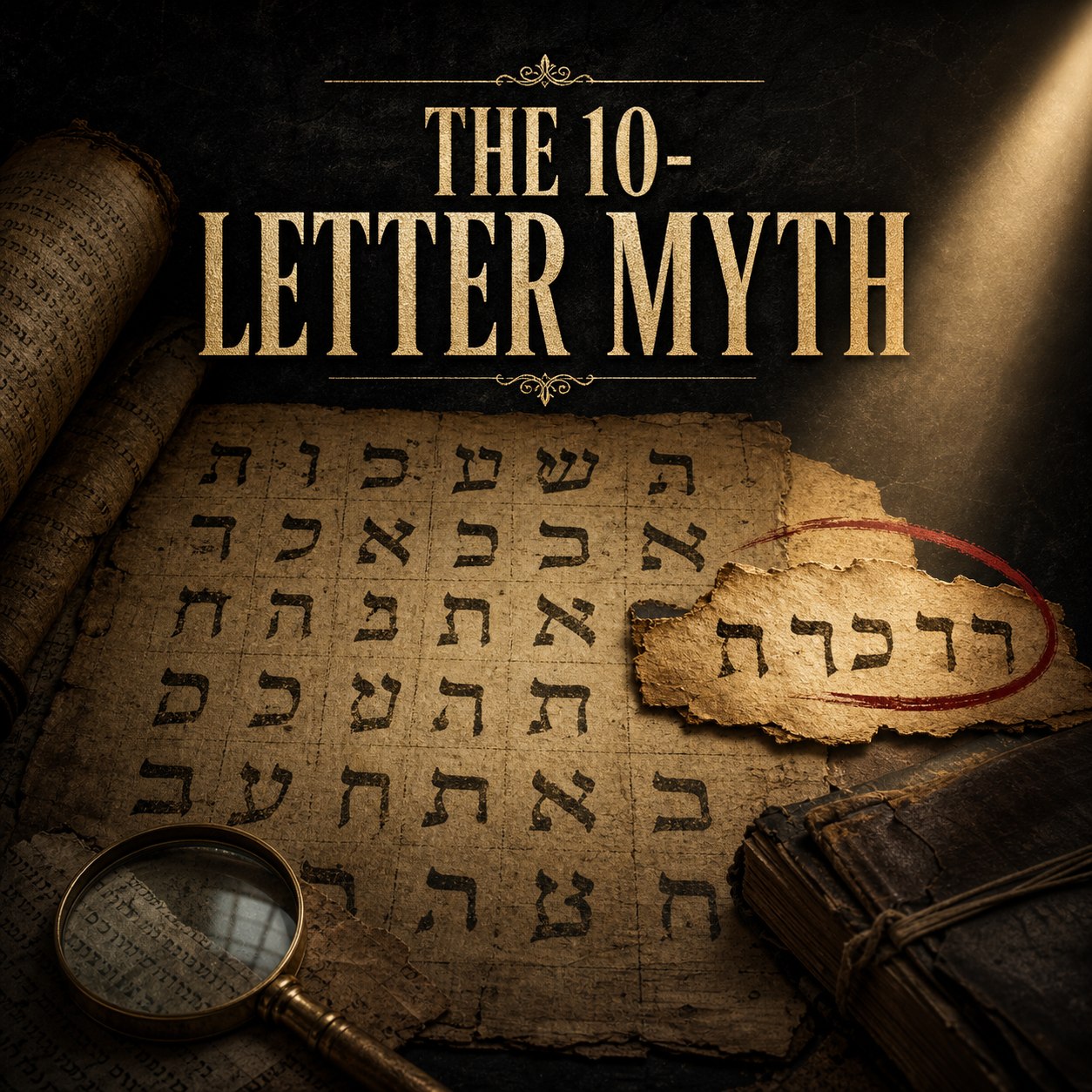
In recent years, a number of Sacred Name groups have promoted the idea of a supposed 10-letter ancient Hebrew alphabet. They use this concept to push their interpretation of the “sacred name,” often using “Yahvahshua” instead of the more commonly accepted names for Jesus, like Yeshua or Jesus. However, this claim lacks any real historical or linguistic foundation and is based on a misunderstanding of the sources they cite.
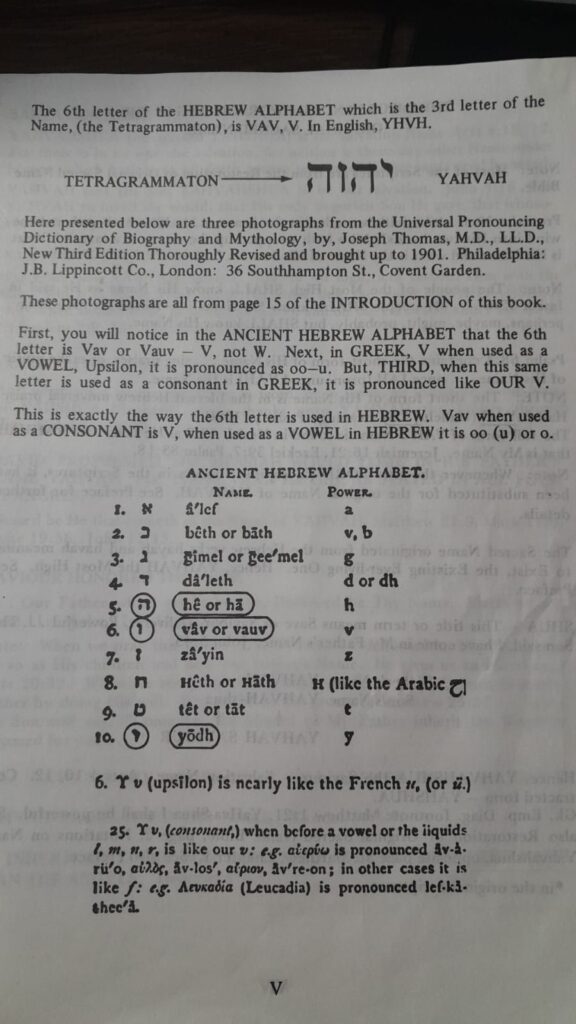
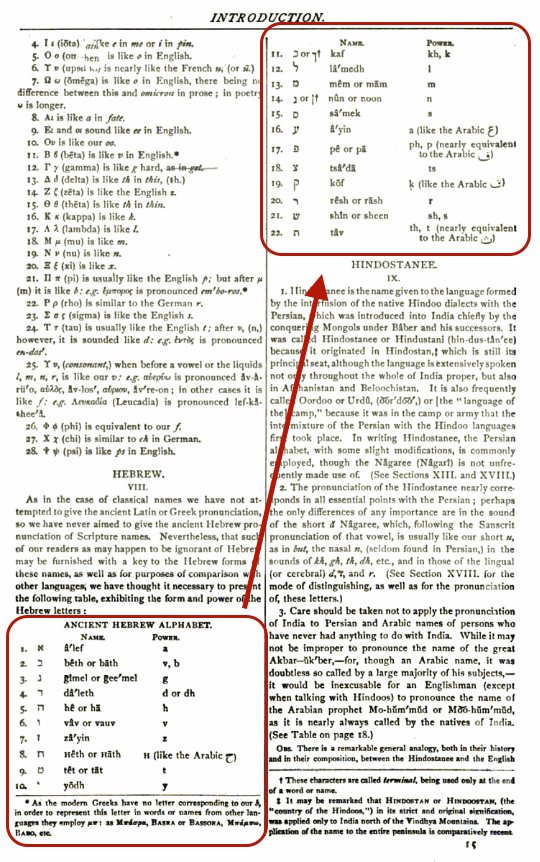
One of the primary sources these groups reference is The Restoration of the Original Sacred Name Bible, which, in turn, pulls a supposed 10-letter Hebrew alphabet from a book called Joseph Thomas’ Universal Pronouncing Dictionary of Biography. The claim is made that page 15 of Thomas’ book contains this 10-letter alphabet, but a closer examination of the original text reveals something entirely different.
The Source Misused

On page 15 of Joseph Thomas’ Universal Pronouncing Dictionary of Biography, we actually find a complete 22-letter Hebrew alphabet—not a shortened or altered version. The 22-letter structure of the Hebrew alphabet is well-documented and has been consistently used in ancient Hebrew writings, including the Bible, for thousands of years. This has been affirmed by countless linguists, historians, and biblical scholars.
The Hebrew language has always been understood to have 22 letters, from aleph (א) to tav (ת). There is no credible historical evidence or manuscript that supports the existence of a 10-letter version of the Hebrew alphabet.
Why the 22-Letter Alphabet Matters
The 22 letters of the Hebrew alphabet are foundational to understanding the Old Testament and many other ancient texts. Each letter carries specific meanings and numeric values (gematria) that have been studied extensively over centuries. By reducing the alphabet to 10 letters, proponents of this theory not only distort the original language but also introduce a flawed approach to interpreting biblical names and concepts, such as the name “Yahvahshua.”
The Sacred Name Argument and the 10-Letter Alphabet
The push for a 10-letter alphabet often stems from Sacred Name groups seeking to justify their use of “Yahvahshua” as the proper name of Jesus. They argue that the traditional 22-letter Hebrew alphabet is either corrupted or incomplete, and that their version somehow restores the “true” name. However, this argument is based on faulty evidence and a misunderstanding of Hebrew linguistics.
In reality, the name Yeshua (יֵשׁוּעַ) is the historically and linguistically accurate Hebrew form of Jesus’ name, derived from the root for salvation (יָשַׁע, yasha). There is no need to invent or support a 10-letter alphabet to validate this.
Conclusion
The idea of a 10-letter Hebrew alphabet is a modern invention that does not stand up to historical or scholarly scrutiny. By misrepresenting sources like Joseph Thomas’ Universal Pronouncing Dictionary of Biography, Sacred Name groups attempt to lend credibility to their beliefs, but these claims fall apart under examination.
The Hebrew alphabet has always had 22 letters, and any attempt to alter this fact undermines the authenticity of both the Hebrew language and its sacred texts. As we continue to study and interpret the Bible, it’s essential that we rely on credible scholarship and historical accuracy rather than myths and misunderstandings.
References
- Universal Pronouncing Dictionary of Biography and Mythology, Volume 1 By Joseph Thomas, 1892.
- Restoration of the Original Sacred Name Bible. First assembly of YAHVAH, 1976.